
Once the royal capital of Laos, Luang Prabang is now known for its elegant Indochinese villas, gilded Buddhist temples, and stunning natural beauty. The picturesque town appears suspended in time, with two distinct cultural traditions seamlessly blended and remarkably preserved.
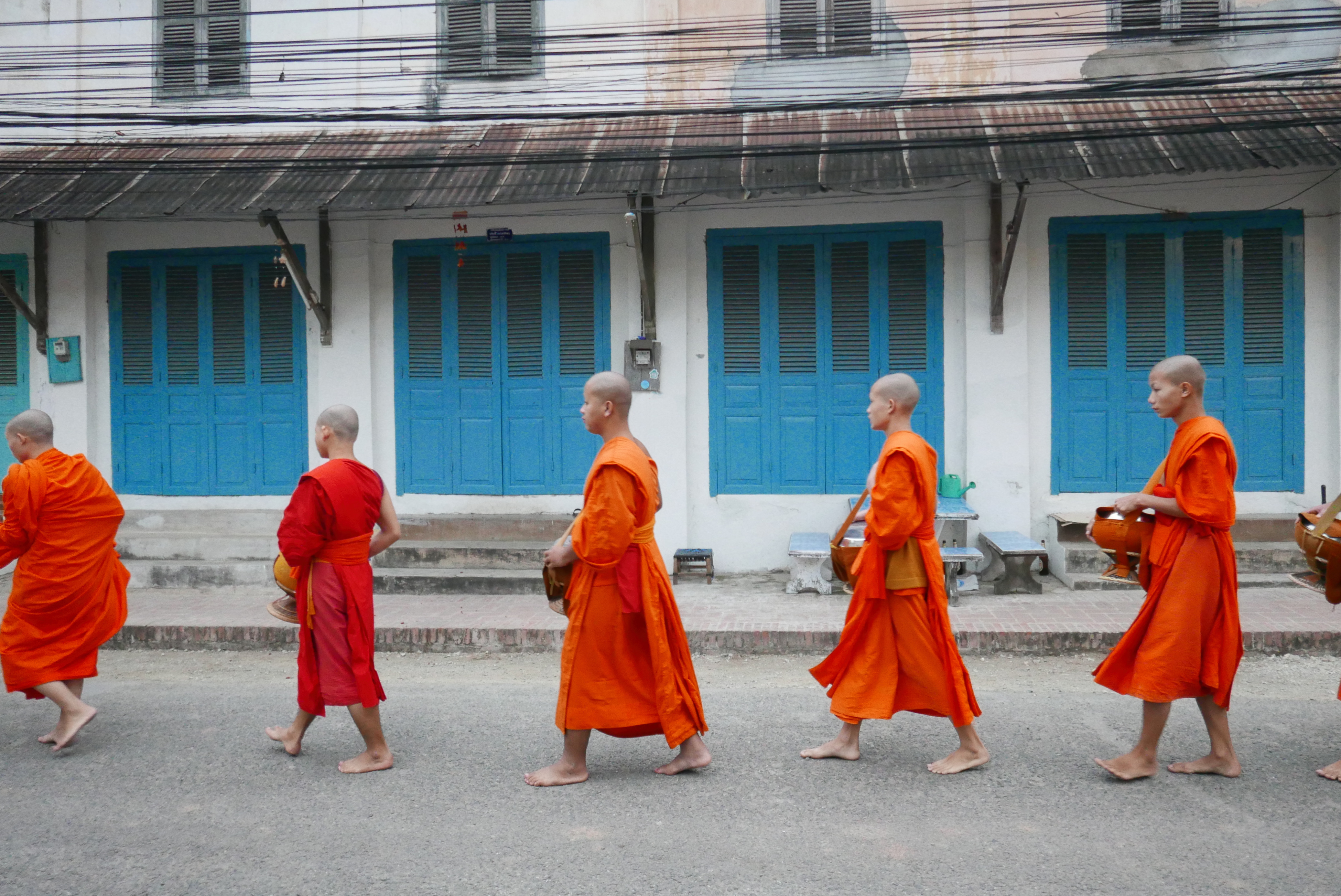
Even before daybreak, the mesmeric sounds of chanting reverberated through the quaint streets of Luang Prabang. It marked the early morning prayer session at 30-odd vats (Buddhist temples) across the town. About an hour later, as the last echoes faded, hundreds of saffron-clad monks with collection bowls strapped around their shoulders emerged through the dawn mist.
A former royal city with a religious aura.
They walked barefoot in a solemn procession, passing the town’s whitewashed villas while accepting alms from local Buddhists and curious visitors. Then, as quietly as they appeared, the monks retreated behind their temple walls in a single fine. Their blazing robes billowed softly behind, creating a spellbinding scene reminiscent of a film’s poignant finale.
This daily ritual is called tak bat, or the almsgiving ceremony. However, unlike many people presume, its meaning is far beyond a charitable act. Instead, it’s a profound expression of respect from the faithful toward the monks, who serve as intermediaries to the spiritual realms. This deep-rooted spiritual connection effortlessly seeps into the rhythm of daily life in Luang Prabang, imbuing Lao’s former royal capital with a mysterious, almost mystical ambiance.
Good to Know: Tak bat is a religious ceremony, and thus, there are a few rules that visitors should follow. Firstly, maintain a respectable distance from the monks and almsgivers. Secondly, photography is allowed but does not obstruct the monks’ path or intrude on their private sphere. Thirdly, this ritual is a silent procession, keeping your voice at a minimum. Last but not least, wear appropriate attire covering shoulders and knees. If giving alms, remember to take off your shoes.


History of Luang Prabang
Indeed, the origin of Luang Prabang is steeped in myths and legends. One compelling tale recounts how Lord Buddha smiled upon visiting the area and foretold its future prosperity and power. Another story involves two wandering sorcerers enchanted by the beautiful peninsula formed by the Mekong and Nam Khan Rivers. They summoned fifteen nagas to define the city’s boundaries and used their powers to conjure magnificent palaces and temples.
In reality, Luang Prabang was founded in 698 by the eldest son of Khun Borom – a legendary figure who is also considered the ancestor of the Lao people. It was named Muang Sua back then, before changing to Xieng Thong and Luang Prabang by the 14th century. The last name comes from the revered golden alloy Buddha statue, the Phrabang, gifted to King Fa Ngum of Lan Xang by the Khmer monarch. At the time, Lan Xang was a prosperous and influential land-locked kingdom in Southeast Asia, dominating the region’s overland trade routes. And Luang Prabang served as its political, religious, and economic heart.
The heart of Lan Xang.
However, following a prolonged dynastic struggle, the kingdom of Lan Xang collapsed and was divided into three smaller city-states in the early 18th century, with Luang Prabang and Vientiane becoming the capitals, respectively. In 1893, both came under French control, with Luang Prabang serving as Laos’s royal and religious capital while Vientiane became the seat of government. These roles remained in place until the monarchy was abolished in 1975, ultimately leaving Vientiane as the sole capital of Laos. Despite losing its royal status, Luang Prabang continued to captivate visitors with a splendid collection of well-preserved temples and elegant colonial buildings. A picturesque natural landscape added to this appeal, leading UNESCO to recognize the beautiful northern town as a World Heritage Site in 1995.
1. The Temples
Of all the features that define Luang Prabang, the vat or Buddhist temples stand out the most. Since the Lan Xang period, Theravada Buddhism has thrived in this area, almost serving as a state religion and leading to the construction of numerous remarkable temples in honor of Lord Buddha. Although time and turmoil have taken their toll, thirty-two historic Buddhist temples still stand today as testaments to Luang Prabang’s glorious past.
These exquisitely decorated temples nestle among compounds of ancient bodhi trees and bright-colored bougainvilleas, featuring elaborate gilded carvings, fine sculptures, and sophisticated gold stencils. Their ornate spires and multi-tiered sweeping roofs rise through healthy green foliage like giant wings, while their staircases are graced with at least a pair of slithering nagas – divine water serpents revered as protectors of Lao Buddhism.


1.1 Vat Xieng Thong
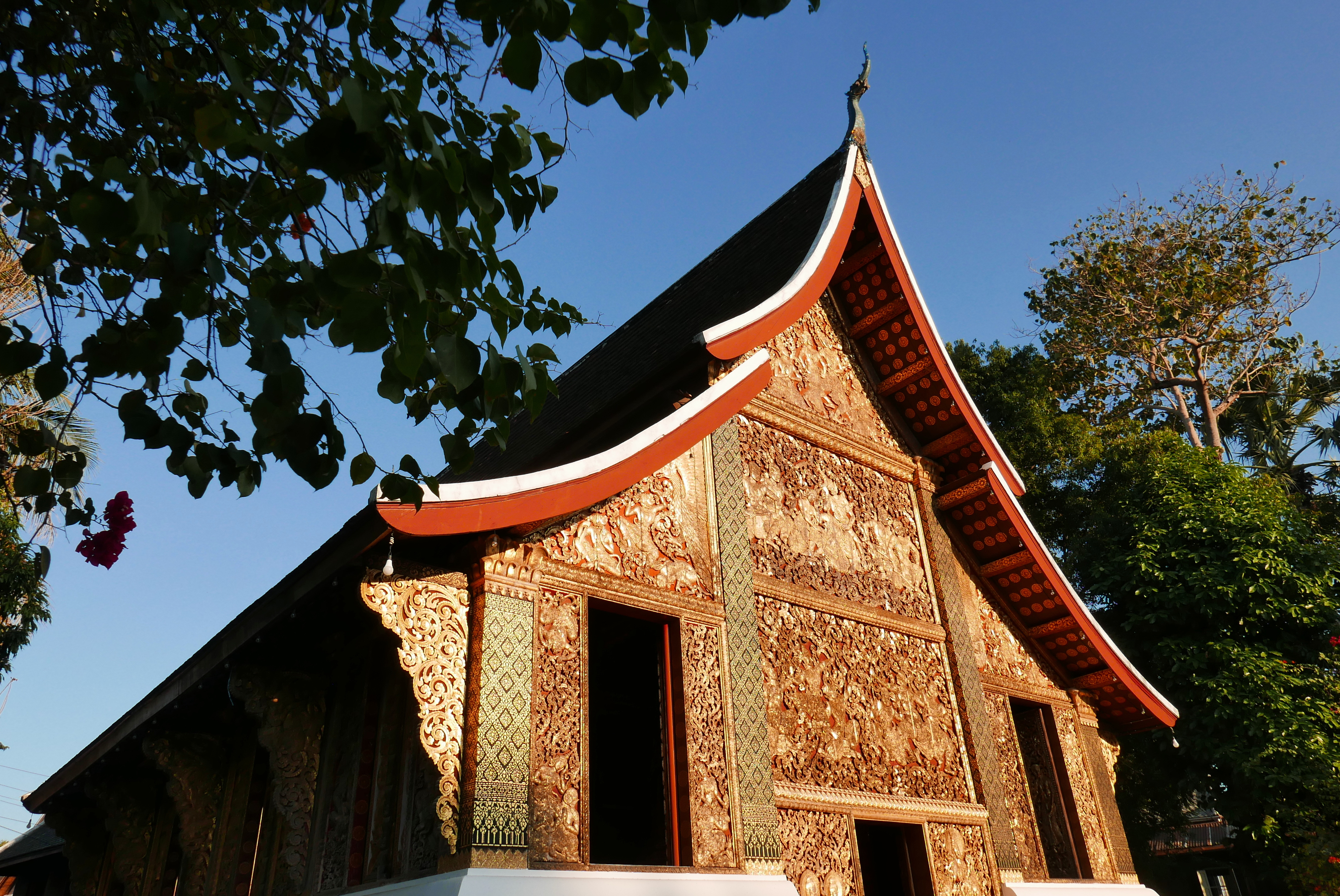
If you can visit only one temple in Luang Prabang, make it the magnificent Vat Xieng Thong. Established in 1560, it’s not only the town’s oldest royal temple but also a rare gem that escaped havoc caused by the Chinese marauders in the 19th century. Beyond its importance as a place of worship, Vat Xieng Thong served as the venue for the king’s coronations and the repository of holy relics and ancient scripts.
As the ‘Temple of the Golden City’, Vat Xieng Thong is a dazzling sight adorned with gold. Its ordination hall is particularly striking, with walls in lacquer black entirely covered by shimmering gold stencils of mythological figures, flowers, and geometric designs. The front façade is equally impressive, showcasing intricate gilded carvings thoroughly, while the rear garble features a vibrant glass mosaic depicting the Tree of Life. Crowned over the entire structure are nine cascading roofs that gracefully sweep down to the ground like two hands in prayer.
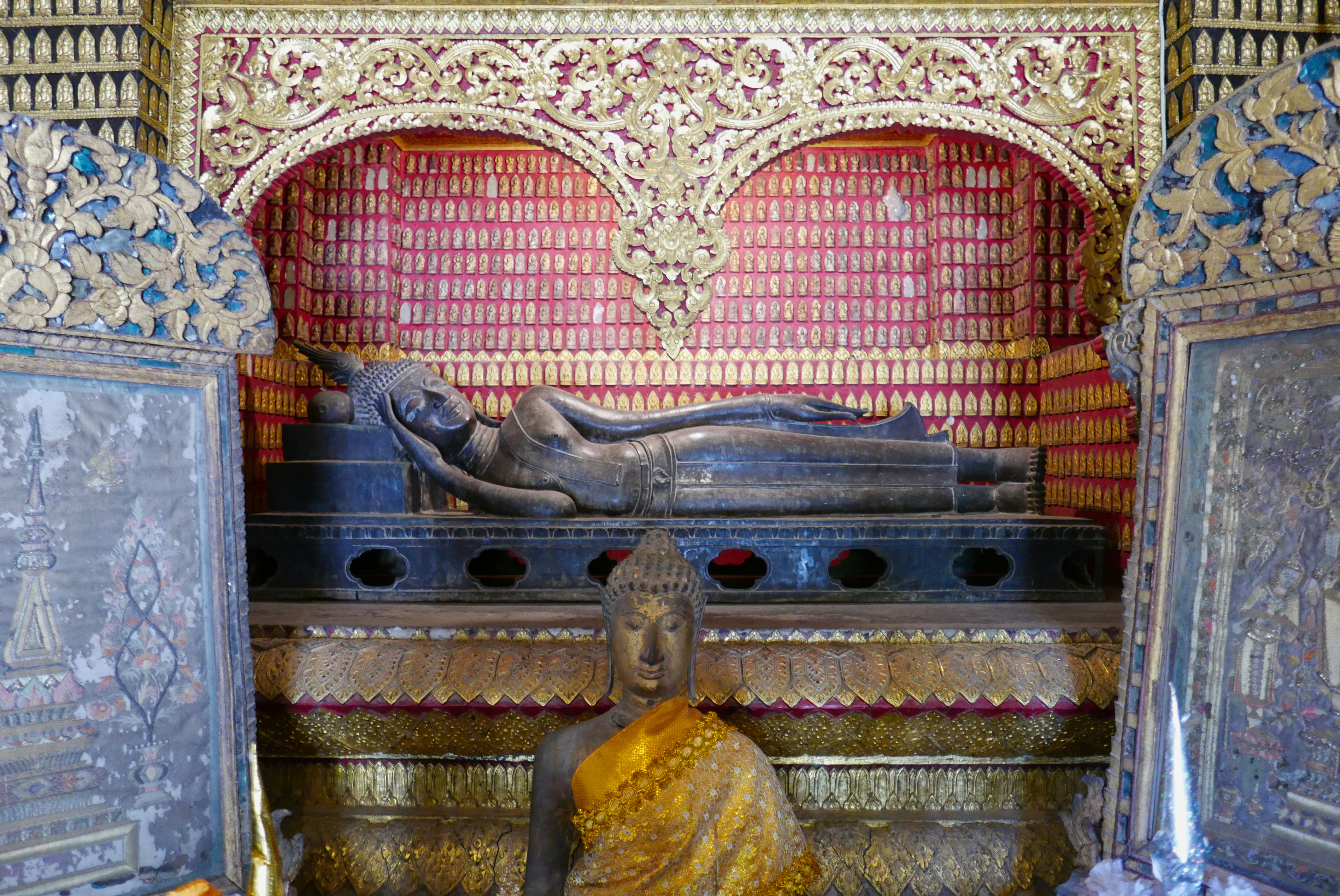
Next to the ordination hall are several stupas and an ornate peach-colored chapel housing a marvelously crafted Reclining Buddha. This bronze statue dates back to the temple’s founding and is considered one of the finest in the region. Another vast structure stands across the ordination hall, whose façade is a gilded masterpiece, serving as a warehouse. It contains the royal funerary barge, last used in 1959 when King Sisavang Vong passed away, alongside a collection of standing Buddha sculptures to look over him in the afterlife.
Luang Prabang’s oldest and finest.
Good to Know: Vat Xieng Thong looks best at dusk when the last rays illuminate the Tree of Life and the intricate façade of the warehouse.




1.2 Vat Mai Suwannaphumaham
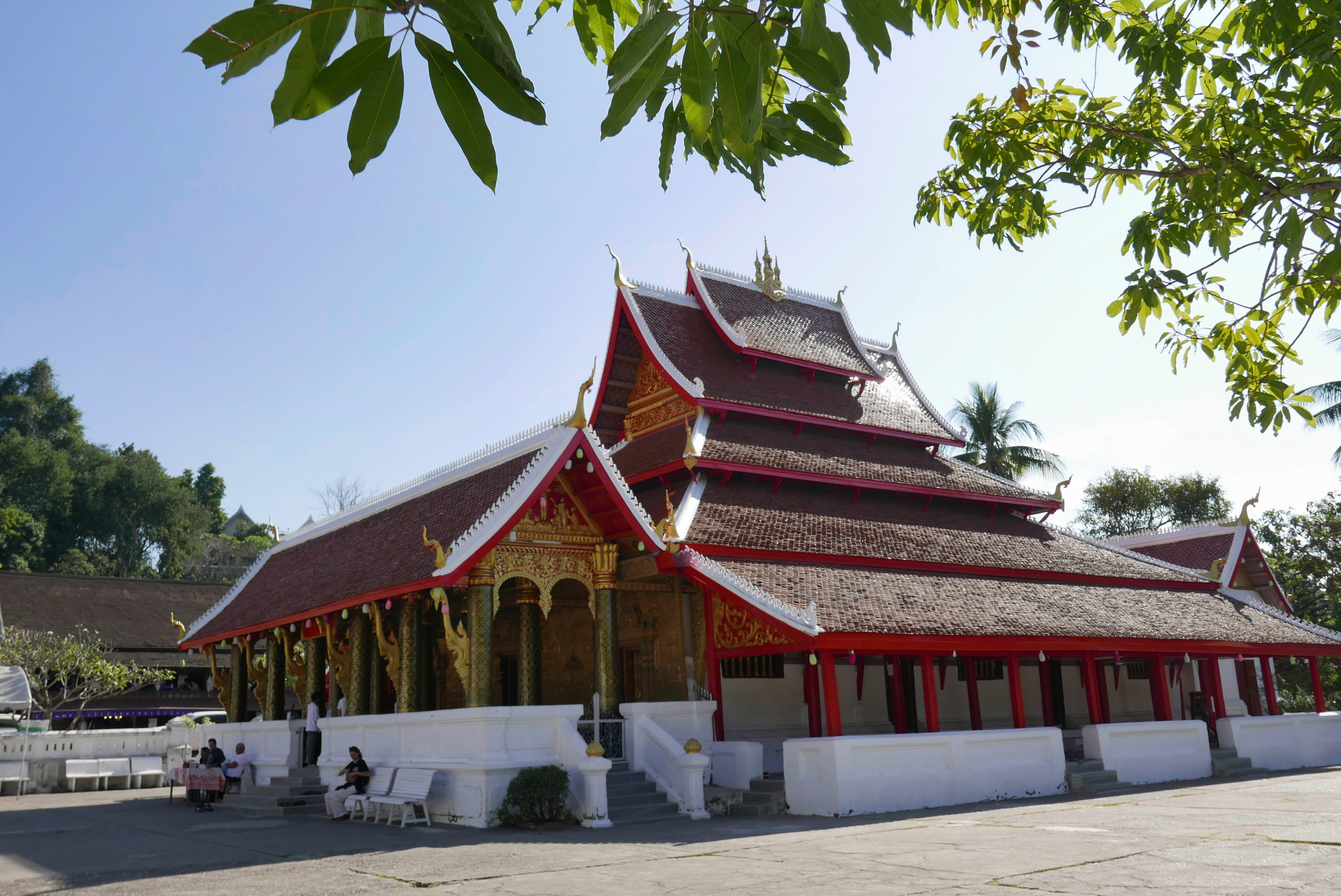
If Vat Xieng Thong is Luang Prabang’s finest and oldest temple, Vat Mai Suwannaphumaham, or simply Vat Mai, is considered the grandest. This royal temple was built at the turn of the 18th century and used as the residence of the Sangharaja, the patriarch of Lao Buddhism before the position was shifted to Pha That Luang in Vientiane. The temple also sheltered Laos’ palladium, the Phrabang, for six decades, following the Chinese bandits’ widespread devastation of Luang Prabang and its temples in 1887.
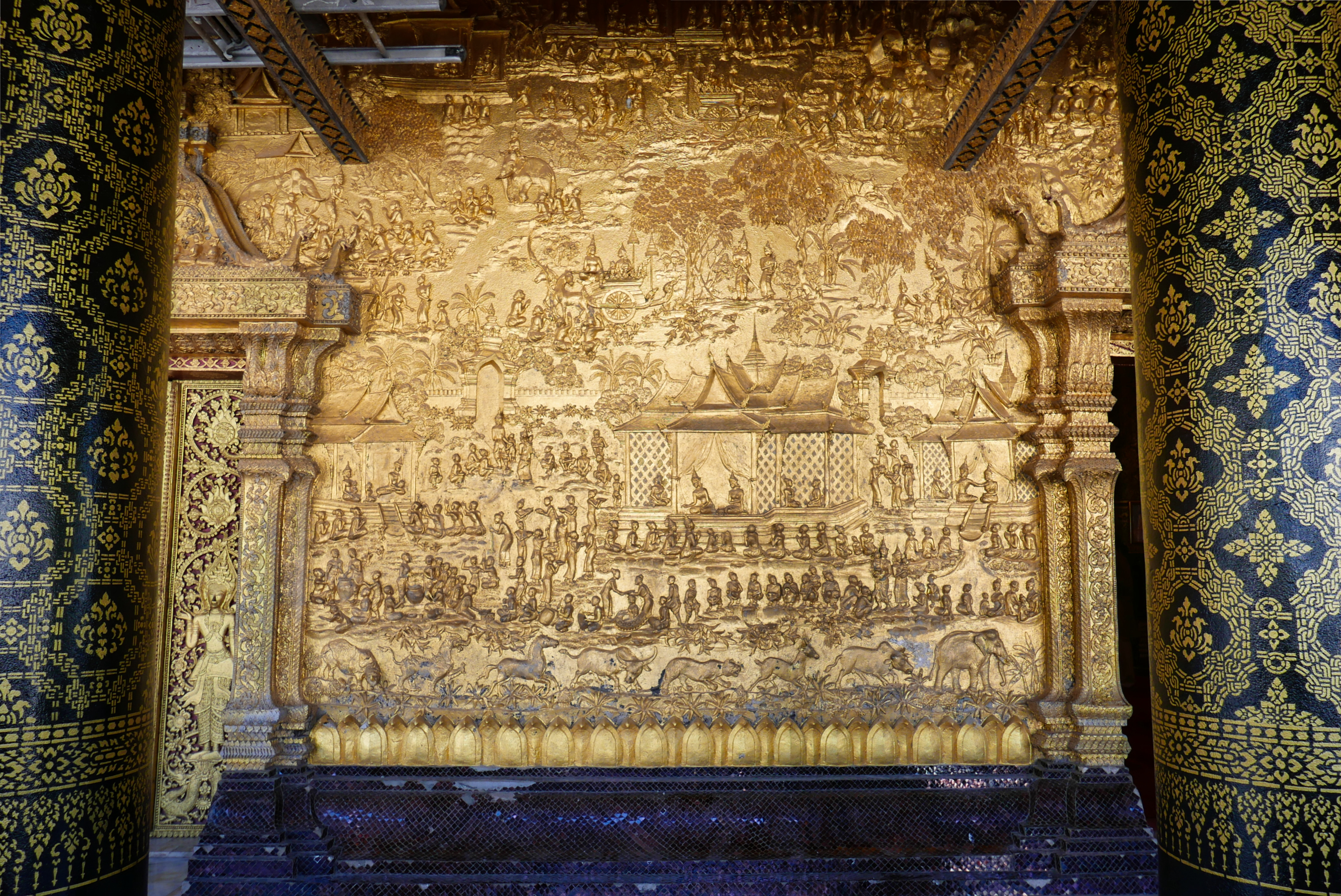
As Vat Mai, fortunately, escaped destruction, many of its architectural elements remain intact, including the five-tiered roof, the French-inspired veranda, and the bas-relief depicting village life, the Ramayana, and Buddha’s penultimate birth. Initially crafted from cement, this full-walled artwork was covered in black lacquer and then gilded during the restorations of the 1960s. The interior is no less stunning, with stenciled gold motifs floating like vision across a backdrop of deep black and crimson.


2. French Architecture
Aside from the gorgeous Buddhist temples, Luang Prabang is renowned for its juxtaposition of French architecture and Lao traditional housing. The city has managed to preserve this architectural richness — though more by chance than by design — offering visitors a glimpse into an era when Luang Prabang’s history intertwined with French colonial rule, lasting from the late 19th century to the mid-20th century.
It’s like two worlds curiously blended. On one side, we have the old stilt houses with overhanging balconies, primarily constructed of teak wood using age-old techniques and materials. On the other side, there are white-washed Indochinese villas that line the main streets and the Mekong riverside. These stately brick structures feature high ceilings, wooden shutters, and spacious verandas. They are now often finding new life in galleries, boutiques, hotels, or even museums.


The National Museum
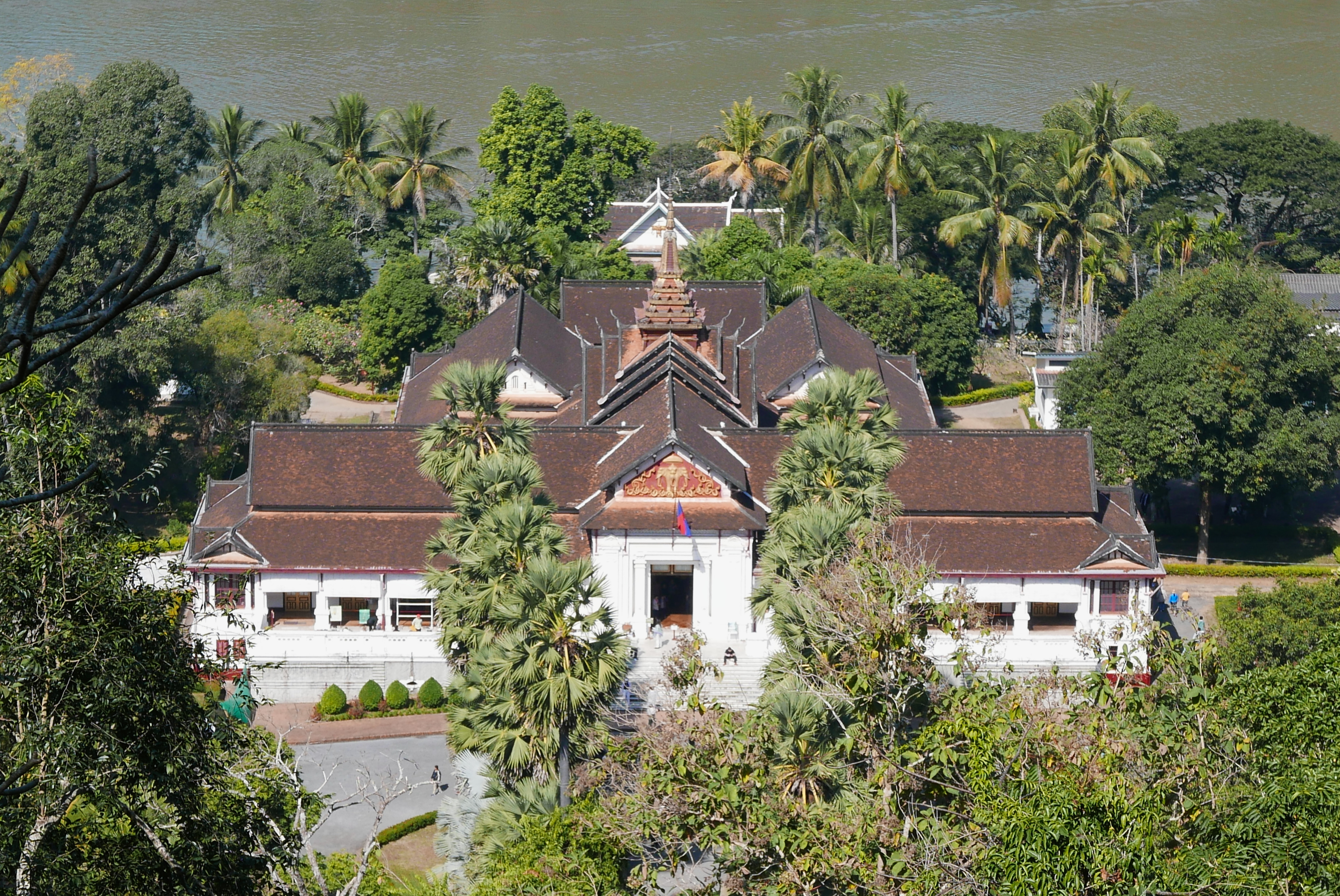
A superb example of Luang Prabang’s architectural fusion is the National Museum, constructed in 1904. Initially, it was the residence of King Sisavang Vong, the penultimate ruler of the Lao monarchy, before being converted into a museum in 1976. The palatial building, made of brick and stucco, draws on French Beaux-Arts design, featuring a double-cruciform layout linked by the throne room, a facade adorned with columns and pediments, and a large, manicured garden. Nevertheless, this palace preserves many traditional Laotian elements, evident in its gilded central spire, steeply pitched roofs, and decorations.
A curious blend of two distinctive cultures.
Within the palace are simple yet tasteful residential quarters, with some rooms preserved in their original state since the monarchy’s end in 1975. Only the throne room is richly ornate with colorful glass mosaics set against crimson walls. This room contains various royal relics, including gem-encrusted swords, scabbards, the king’s saddle, and several precious Buddha images. Equally interesting is the reception hall, with murals depicting life in Luang Prabang, golden thrones, chandeliers, and gifts from foreign dignitaries.
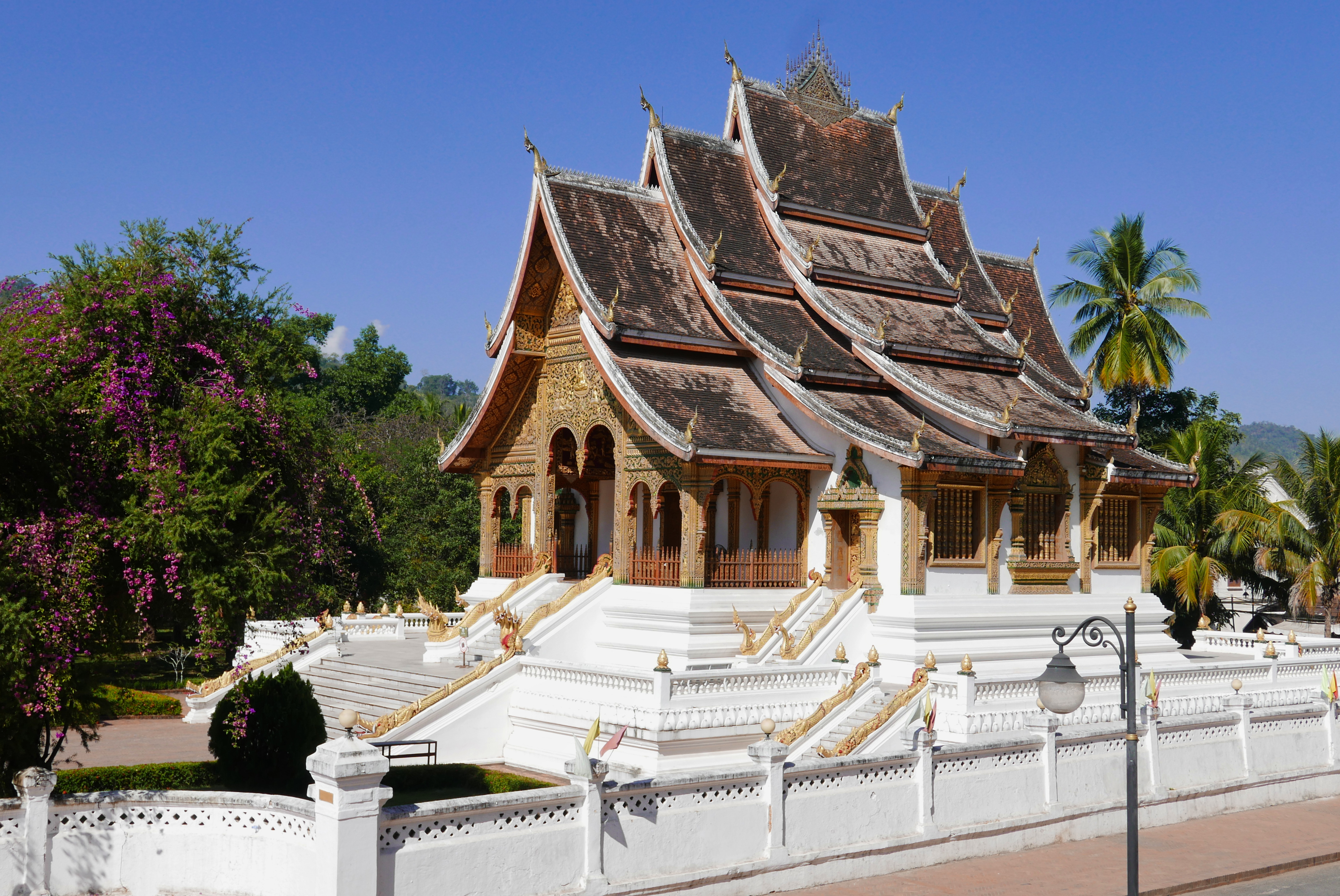
However, no treasure is more venerated than the Phra Bang, an 83cm-tall gold-alloy statue of Buddha with hands in the mudra, or position of dispelling fear, currently residing in the Haw Phra Bang Temple in the southeast corner of the palace garden. Though it reflects traditional artistry, this exquisite temple was completed in 2006 and showcases intricately gilded gables and doors, multi-layered roofs, and fascinating naga sculptures that grace the staircase.
Good to Know: Except for Tuesday, the National Museum operates from 08:00 – 11:30 and 13:30 – 16:00. Footwear and photography are strictly prohibited inside the main building, while bags must be left in the locker room to the left side of the entrance. An audio guide is available and included in the ticket price.


3. Natural Sceneries
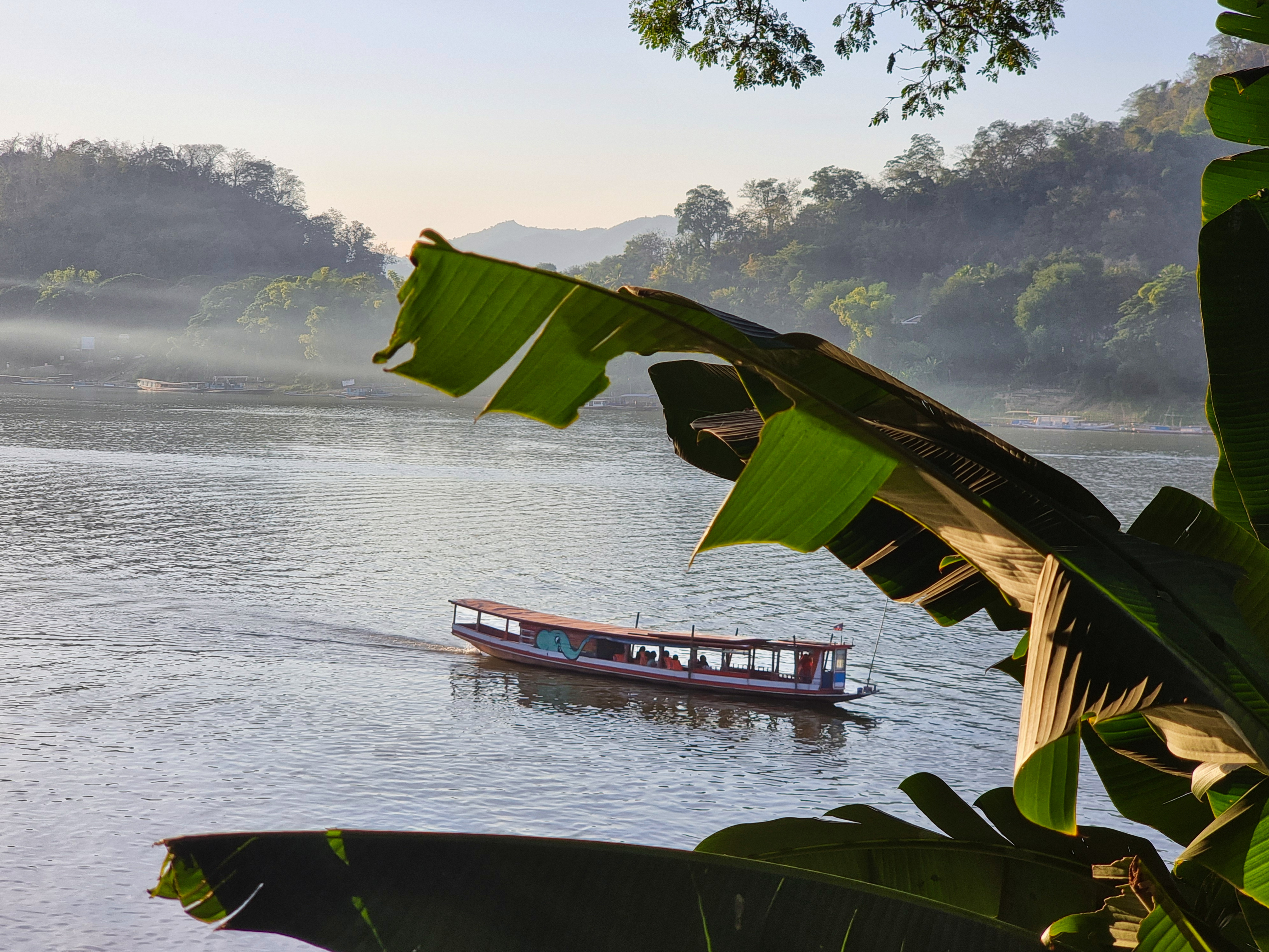
Though the unique blend of architecture has made the name of Luang Prabang, part of the town’s charm lies in its stunning natural setting. Nestled at the confluence of the mighty Mekong and Nam Khan rivers, with forested mountains forming its backdrop, Luang Prabang is one of Laos’ most, if not the most picturesque destinations. Evocative scenes are not difficult to find along the river banks, from longtail boats puttering in the hazy air along hills of tropical plants to the fiery sunset that cast a warm golden hue over the water and the riverside stilt houses.
The sunset might look even more mesmerizing from the peak of Phou Si – a hillock rising directly across from the National Museum. At 100 meters high, it dominates Luang Prabang’s historic core and offers panoramic views of the town and the countryside. For locals, Phou Si is sacred as it shelters several shrines, including one that reportedly houses Buddha’s giant footprint. The hill is topped by a gilded stupa that, when viewed from afar, resembles the crown of Lao monarchs.
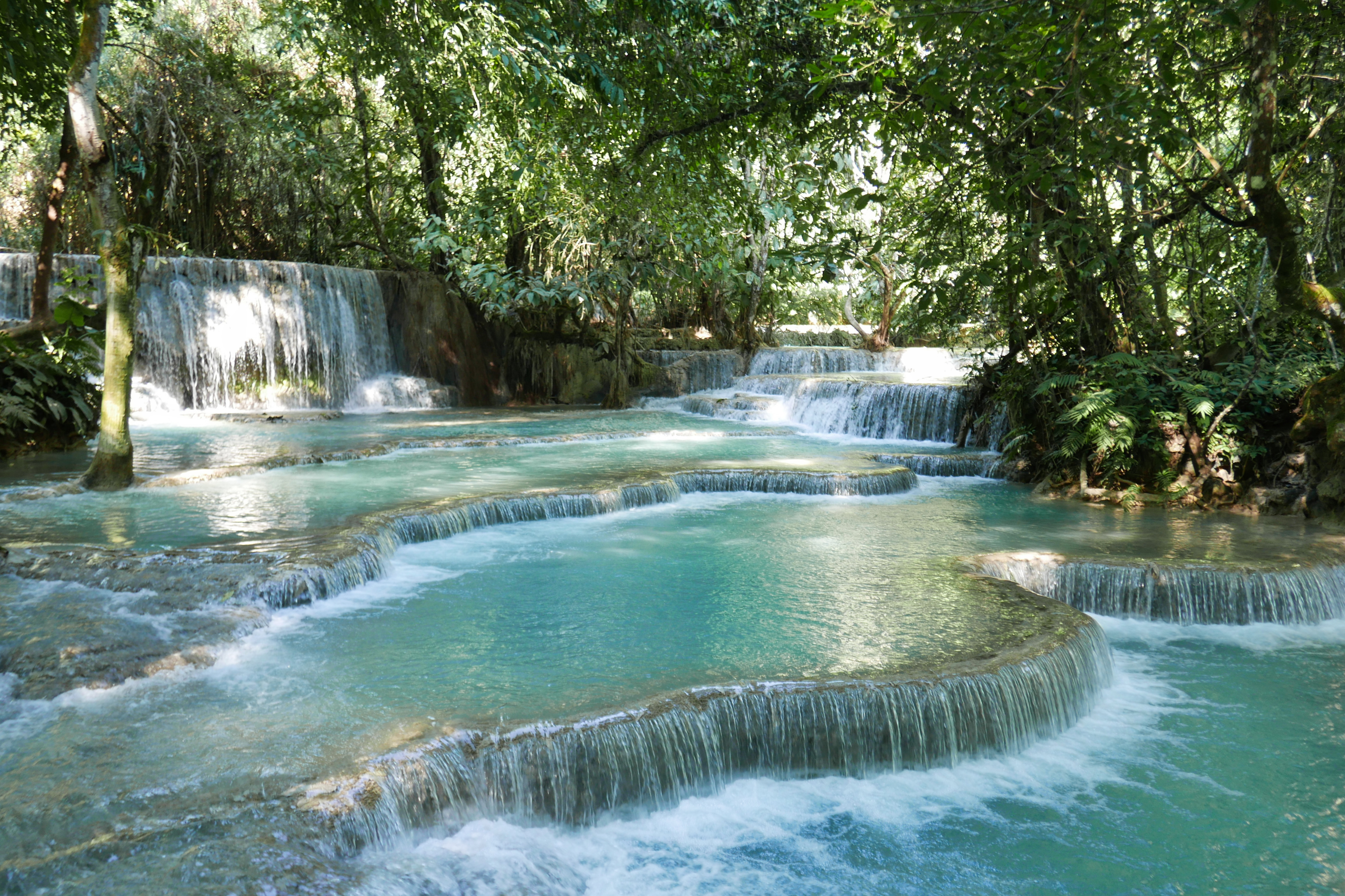
Just outside the town, Mother Nature puts on a spectacle at Tat Kuang Si, a series of waterfalls and jungle turquoise-colored pools created as water cascades over white limestone formations. The main waterfall reaches a height of 60 meters, generating enough mist and splash to cool the surrounding air. Additionally, the area serves as a sanctuary for more than 100 sun bears and moon bears that have been rescued from poachers who would eventually sell them to cruel bile farms catering to the demands of traditional Chinese medicine.
Part of the town’s charm lies in its natural setting.
Good to Know: Located approximately 30 kilometers from Luang Prabang, Tat Kuang Si is easily accessible by tuk-tuk and car. The journey takes 45 minutes to one hour on decently paved roads. Upon entering Tat Kuang Si, you will find the Bear Rescue Centre. Run by Free the Bear, this center’s work depends on donations and sponsorship.




I loved Luang Prabang, but I have to say I was so disgusted by the behaviour of tourists at the alms ceremony that it tarnished my memory a bit. I read your tips and wonder if you experienced the same bad behaviour or were we just unlucky. Maggie
Worse… I noticed one guy walked side by side with the novice monks and live-streamed. He only stopped when locals intervened 🙁 There should be a hefty fine for such behavior. It’s pervasive and blasphemous.
I assume these people don’t behave like that in their home country. But once they landed in a foreign country, all rules and etiquette automatically vanished.
Live streamed! What is wring with people!!
Your posts are very detailed, so much information! I was charmed by the mix of French and traditional architecture and culture in Luang Prabang. And moved by the many locals who offered rice to the monks. It felt like an honor to observe their procession.
Thank you! It’s indeed an amazing ceremony. Sadly, some people ruined it just for Instagrammable photos or TikTok. I wonder how long they will tolerate these ill manners. Sooner or later, they might ban tourists from entering specific areas, like Kyoto.
Ahh this brings back a lot of fond memories from my trip to Luang Prabang in 2012. Despite the oppressive heat (James and I went during the hottest month of the year!), we still very much enjoyed the laid back atmosphere and the beautiful architecture of this town. I remember feeling so relaxed there. It’s unfortunate, though, that badly behaved tourists still harass those monks up to this day, even after all those warnings. Some people are just so insensitive to deeply religious rituals like this.
Ignoring those fools must be a part of the monk’s training 🙂 I was surprised to know that tourists already behaved badly in 2012. Thought it was a current phenomenon.